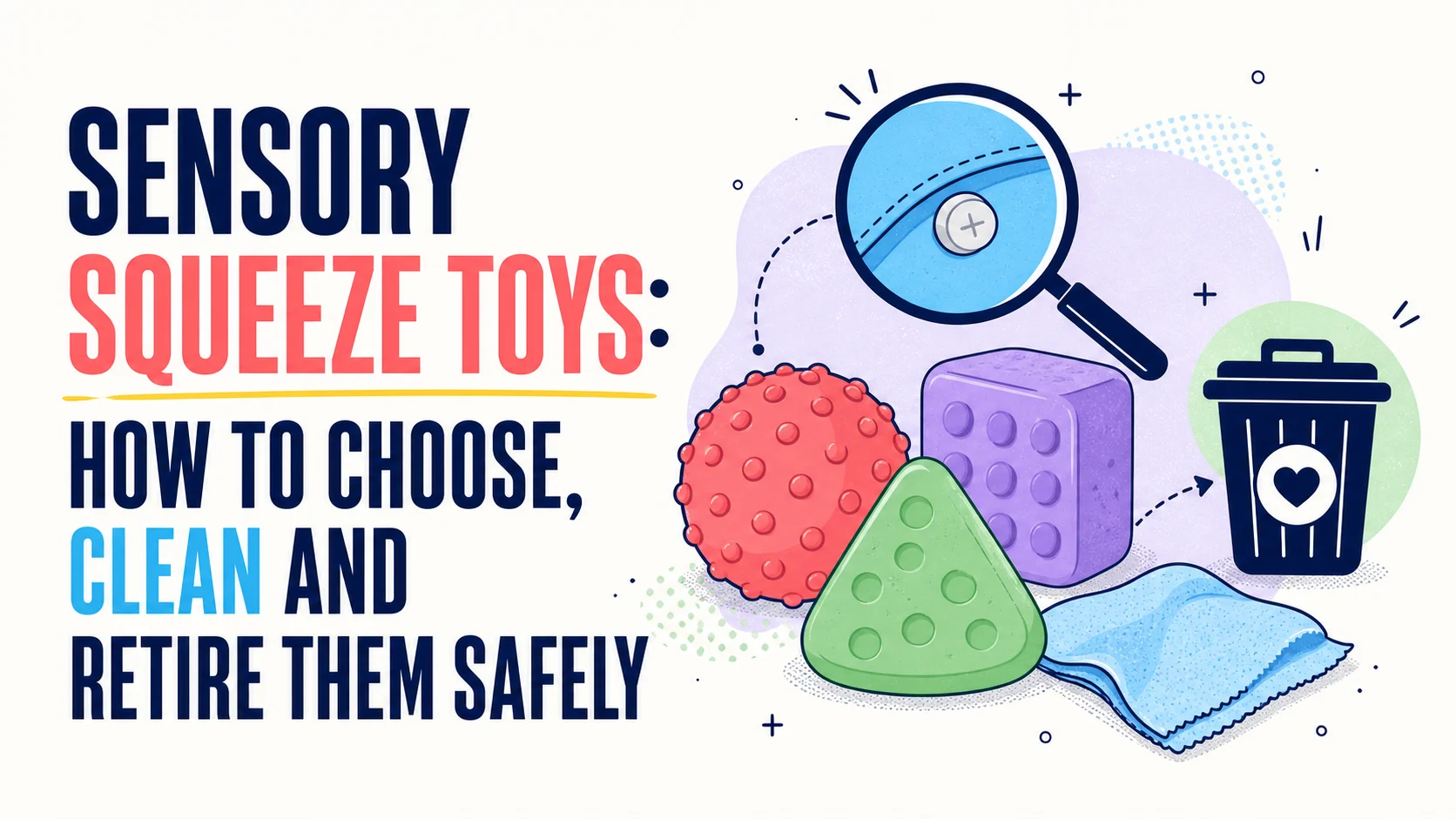
Our conclusion is a starting point, not a substitute for the product’s current instructions, local safety information or the child’s individual readiness.
Check the complete material description
A useful record names the outer material, filling, coatings and intended care method instead of relying on the word safe. For gels, foams or liquids, it should explain what to do if the surface splits.
Inspect seams, valves and surfaces
Before first use, check weak seams, loose caps, sharp mould lines and areas that hold dirt. Repeat the inspection because squeezing, twisting and chewing can change a product over time.
Match size and use to the child
Small sensory pieces can become choking hazards and soft products are not automatically suitable for babies. Follow local warnings, especially around magnets, water beads, decorations and button batteries.
Clean and dry for the material
Water can enter seams or hollow shapes never designed for immersion, while strong cleaners may damage coatings. Follow care instructions and allow the toy to dry completely.
Avoid medical claims
Sensory preferences vary. Describe slow resistance, a textured surface, a clicking sound or repeated spinning — not promises to treat anxiety or improve attention.
Responsibility & transparency
Editorial record
Responsible organization
Find Best Toys Editorial. Organization-level authorship is used because no verifiable named author or specialist reviewer is on file.
Research method
Desk research of the primary sources listed on this page. Claims are mapped to the source notes below; this is not a hands-on product test. Read the safety and source policy.
Commercial disclosure
This guide contains no paid placement or affiliate product links. Commercial relationships do not determine its source selection or advice. Read the affiliate disclosure.
No named medical, child-development or toy-safety specialist has reviewed this guide. Find Best Toys does not claim that independent professional review has occurred.
Claim-to-source map
References and source notes
These primary and official sources support the specific claims listed beneath each link. A citation does not extend beyond those claims or replace current product instructions.
Claims that a product treats anxiety, attention or another health-related outcome need competent and reliable scientific evidence tied to that product and claim.