Our conclusion is a starting point, not a substitute for the product’s current instructions, local safety information or the child’s individual readiness.
Start with the activity, not the label
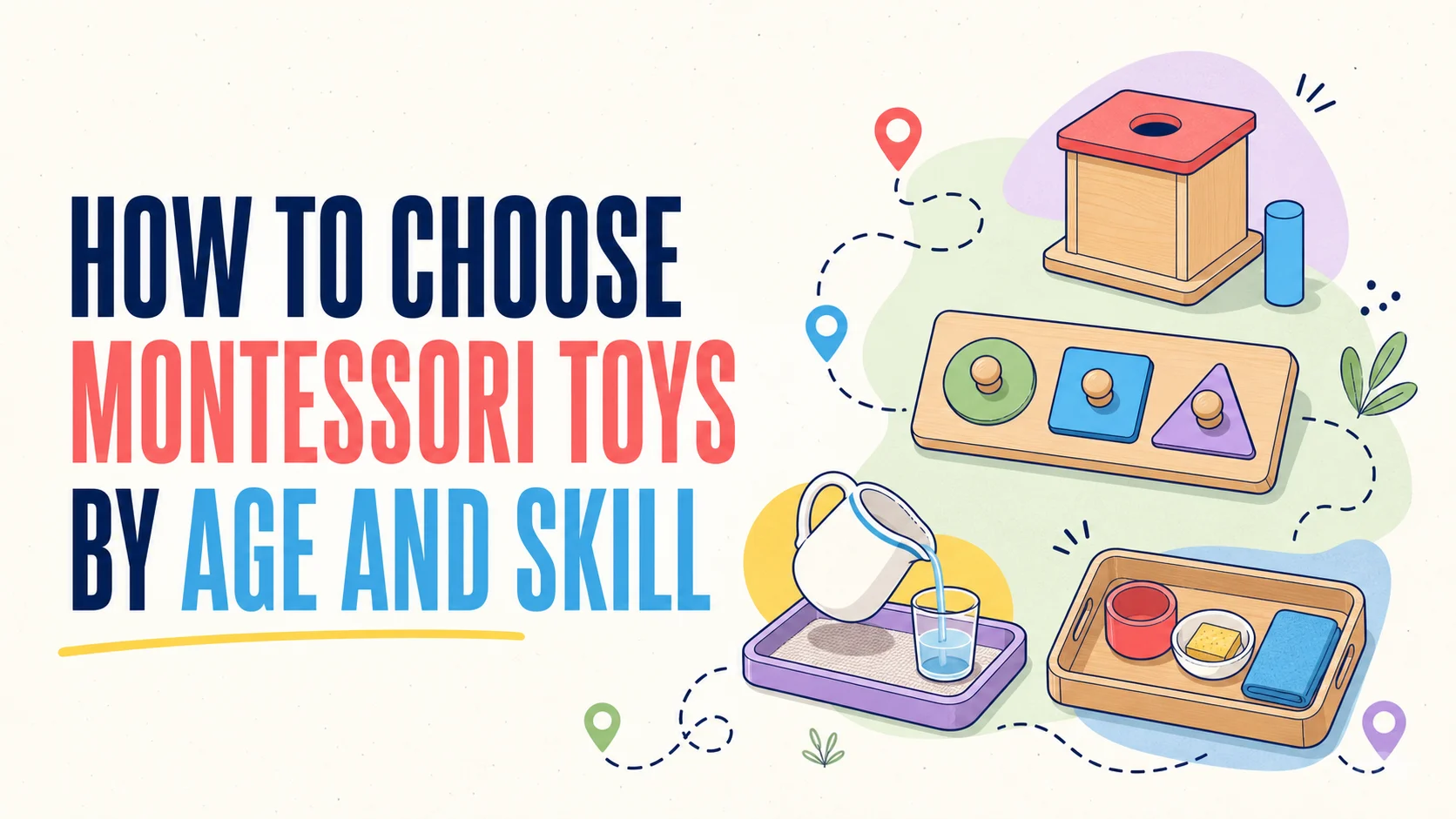
Montessori is more useful as a way of observing an activity than as a sticker on a box. Look for one clear, repeatable action a child can understand without a long adult performance: fitting, sorting, transferring, opening, closing or building.
Match the challenge to readiness
The best fit feels interesting without becoming an endurance test. For toddlers, large pieces and a short sequence usually matter more than a long list of learning claims. Age labels remain a starting point; dexterity, attention and current interests matter too.
Material alone proves nothing
Wood does not make a toy educational. Check weight, finish, grip, noise and whether the object stays stable during use. Good information explains coatings, cleaning and storage instead of relying on broad words such as natural.
Look for usable feedback
A child may notice that a piece does not fit, that a sequence is incomplete or that an object is not stable. This feedback can support independent correction without requiring flashing lights or an adult verdict.
Avoid inflated promises
Prefer observable language such as grasping a knob, matching two shapes or arranging pieces by size. No toy should be described as making a child smarter, calmer or advanced without strong and relevant evidence.
Responsibility & transparency
Editorial record
Responsible organization
Find Best Toys Editorial. Organization-level authorship is used because no verifiable named author or specialist reviewer is on file.
Research method
Desk research of the primary sources listed on this page. Claims are mapped to the source notes below; this is not a hands-on product test. Read the safety and source policy.
Commercial disclosure
This guide contains no paid placement or affiliate product links. Commercial relationships do not determine its source selection or advice. Read the affiliate disclosure.
No named medical, child-development or toy-safety specialist has reviewed this guide. Find Best Toys does not claim that independent professional review has occurred.
Claim-to-source map
References and source notes
These primary and official sources support the specific claims listed beneath each link. A citation does not extend beyond those claims or replace current product instructions.