Our conclusion is a starting point, not a substitute for the product’s current instructions, local safety information or the child’s individual readiness.
The short answer
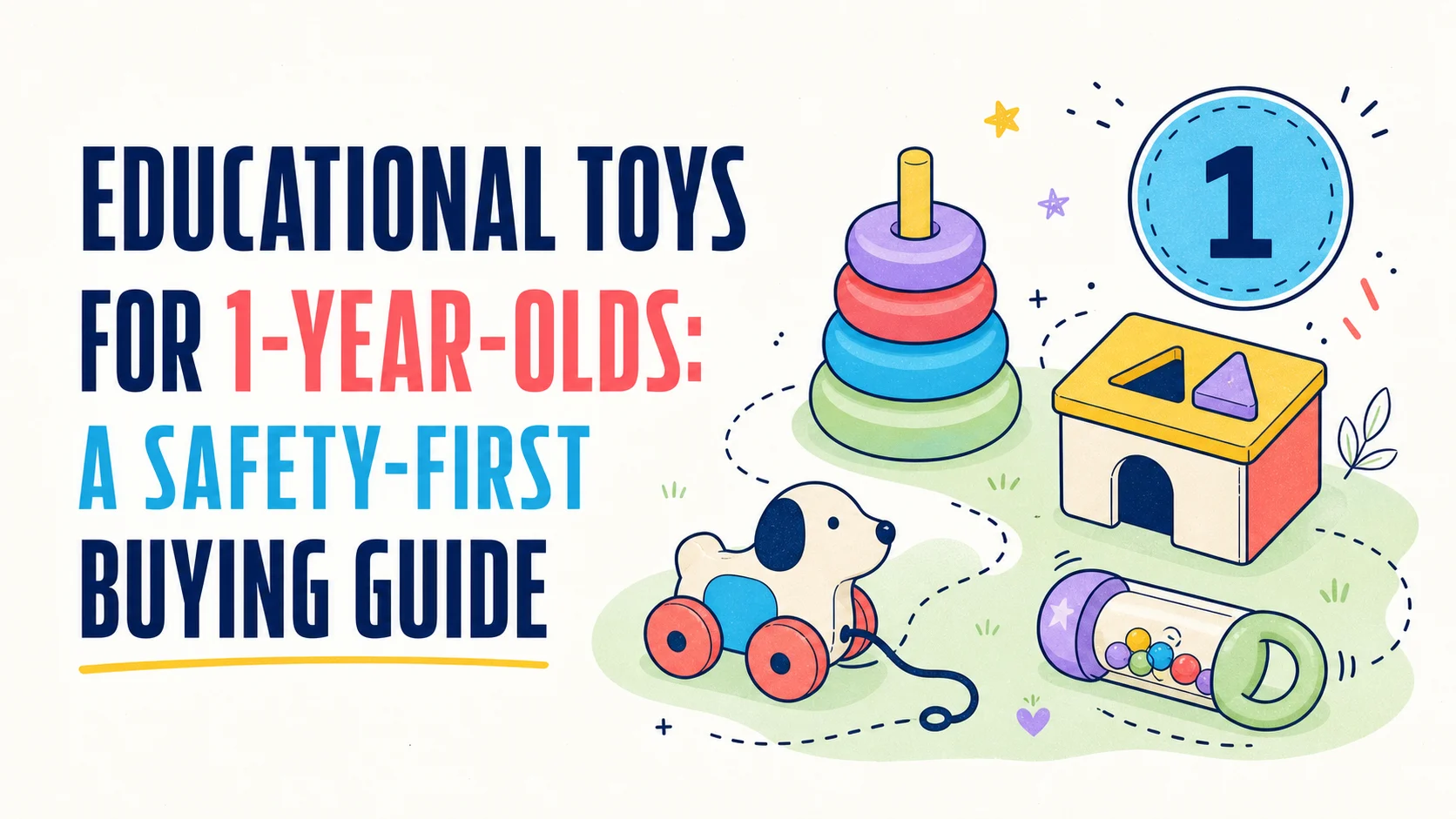
Choose one visible action, large durable pieces and a challenge the child can repeat. Strong categories include nesting, posting, push-and-pull play, sturdy board books, simple instruments and large construction pieces.
Safety is part of age fit
Mouthing, pulling and throwing are normal use at this stage. Check small parts, cords, magnets, button batteries, stability, accessible coatings and whether wear can create a new hazard.
Support movement without rushing it
Toys can invite reaching, cruising, carrying and squatting, but should not promise to accelerate development. Stable supports and open floor play often matter more than a complex gadget.
Make repetition easy
One-year-olds learn through repeating an action. Products that reset quickly let the child stay in the play rather than waiting for an adult to rebuild the experience.
Choose for the home
Noise, storage, cleaning and floor space decide how often a toy is available. A smaller, quieter product used daily may offer more value than a larger feature-rich option.
Responsibility & transparency
Editorial record
Responsible organization
Find Best Toys Editorial. Organization-level authorship is used because no verifiable named author or specialist reviewer is on file.
Research method
Desk research of the primary sources listed on this page. Claims are mapped to the source notes below; this is not a hands-on product test. Read the safety and source policy.
Commercial disclosure
This guide contains no paid placement or affiliate product links. Commercial relationships do not determine its source selection or advice. Read the affiliate disclosure.
No named medical, child-development or toy-safety specialist has reviewed this guide. Find Best Toys does not claim that independent professional review has occurred.
Claim-to-source map
References and source notes
These primary and official sources support the specific claims listed beneath each link. A citation does not extend beyond those claims or replace current product instructions.
American Academy of Pediatrics / HealthyChildren.org· Accessed
Supports
The AAP recommends matching toys to developmental skills and abilities; its examples include push-and-pull, physical, pretend and problem-solving play rather than promising accelerated milestones.